Showing posts with label San Salvador. Show all posts

Wednesday, February 16, 2011

Trinity UPC Delegation & Friends - Day 8

Day 8 - Standing in solidarity with our El Salvador brothers and sisters

This was a hard morning. We had to say good-bye to our delegation buddies. We have lived and breathed with them for the past 7 days and it’s going to be hard to be without them. After the obligatory delegation photo in front of the Pastoral House mural that appears on the front of the house, Larry Leper, Denise Core, Margaret Blair, Linda O'Connell and Betty 'Liz' Sandy were picked up at 8:30 a.m. by Alfredo in the white microbus – the same driver and vehicle that had brought us to this place.

That left us (Maurice and Betty Dyer), at the house with the pastoral team, Kathy Mahler, our fearless mission co-worker and Alisha Lundberg, who arrived the day before we did in San Salvador. Alisha is a native of Des Moines and the Westminster Presbyterian Church and has arrived down here for a 10-month stay to teach English at one of the local schools, along with the possibility of another school and private lessons. We had the privilege of having her join us for the week during all of our adventures. She was a true delight and we did so much enjoy her company and it felt like she’d been made an honorary delegation member.

No sooner had our delegation buddies left, then it was announced by Blanca that they were very sad to tell us that WE WERE GOING TO THE BEACH! They wanted us to have a relaxing day at the beach and honestly, not only did we need it, but I think they all did, too! We packed up everything needed for a day at the beach and headed to Usulutan where we just had a little farther to drive to the local beach.

It was unbelievably beautiful! We had our own little hut complete with mucho hammocks. We waded in the Pacific Ocean, got soaking wet and lounged to our heart’s content. We ordered lunch that came with giant fishies on our plates. We bought jewelry from the locals when the little girl showed up with her big eyes. We also bought from a gentleman who came with a larger variety of items.

We were home again by 5:00 p.m. and after finishing up our decorations for the Alejandria celebration on Thursday and we crashed. It had been a long day and a long week.

A big thank you goes out to the wonder members of the pastoral team here. Blanca, Cecilia, Idalia, Aminta, Balmore & Jesus.

They go so far above and beyond to make our visits great ones. What wonderful individuals they are and such dedicated ones! Who else would do the wonderful work that they do and not get paid for it?

And Kathy has outdone herself, yet once again. The relaxed way that she takes on any and all situations never ceases to amaze me. She has such a gift for doing the work that she’s doing here. We are so blessed to have her in this position representing all of us in the Des Moines Presbytery. If you have experienced her work first hand, then you already know what I mean. If you have not, ask anyone who has been on a delegation here.

Thanks to my wonderful traveling buddies for the past week: Larry Lepper, Denise Core, Margaret Blair, Linda O’Connell, Betty Sandy and the love of my life, Maurice Dyer. I can’t tell you how glad I am that he was able to come with me on this trip. I know that all of my traveling buddies, and especially Maurice, “get it.” They understand the importance of coming to El Salvador to stand in solidarity with our brothers and sisters here. ~Betty


Pictured above: Larry Lepper, Betty Sandy, Margaret Blair, Betty Dyer, Denise Core, Linda O'Connell and Maurice Dyer.

Trinity UPC Delegation & Friends - Day 7

Day 7 – Trinity United Presbyterian Church El Salvador Delegation ,
by Larry G. Lepper

The day began with a wonderful breakfast prepared by Cecelia of the Pastoral staff. It consisted of scrambled eggs, fried plantains, beans and tortillas. Being Valentine’s Day, there was a card and small turtle toy at each place setting. They were from Betty Dyer to each of us. It was very thoughtful of Betty. The Pastoral team marched in with a gift for each of us. Each of us received candy and a small gift. It was a great breakfast.

Our schedule for the day was to visit two schools in or near Berlin. We gathered our gifts we had brought for the schools and prepared to leave. Before we could leave I went with Kathy Mahler to put gas in the truck. There are two gas stations in Berlin. The first one we visited is very close to the Pastoral House. As we pulled in the station attendant shouted “No gas!” So it was off to the other station where we purchased gas. One does not say “Fill ‘er up” but tells the attendant an exact dollar amount to put in the tank. Yes, it is full service. Kathy asked for $40 of gas. That $40 put 10.61 gallons into the tank. That’s $3.77 per gallon.

Then it was off to two schools. At the both schools we visited kindergarten, and first and second grades. Students either go in the morning or afternoon. Mornings were the younger children and afternoons older children. The first school had about 45 children in the morning and 45 in the afternoon. Kathy first introduced us with our Spanish names. Then Kathy asked each of them their name. They were a bundle of energy, just like kids everywhere. They counted 1 to 10 in Spanish and then we did also. Then they sang a song to us and we returned the favor with a simple rendition of “If you’re happy and you know it, clap your hands….” We then presented the teachers with gifts for the school consisting of white board markers, glue, permanent markers, jump ropes, crayons, craft supplies and coloring books. The children at the first school led us on a very short walk to their soccer field where they would play at recess. Being the dry season it was dusty and a little worn from all the little feet running over it. They were more fortunate than the second school which was right in the city and had a small paved play ground.

The second school had about 125 students. We visited both morning classes with the same procedure as the first school. Not as many school uniforms were evident in this school as the first. We assume the lack of uniforms was due to personal finances of the family.

We were struck by the dedication of teachers. They were trying to do so much with very limited resources. The children were like most random groups; some were natural leaders and others were quiet and reserved. The children were bursting with energy which we enjoyed.

After the school visits we returned to Casa Pastoral for a wonderful lunch of chicken, beans, fresh pineapple, fresh papaya, rice, onion salad and tortillas. Then it was off to the coffee finca (farm) to learn about growing, harvesting and processing coffee. Senor Evers was the coffee foreman who showed us around and explained the process. Not much was happening on the finca as the harvest was completed a couple of months ago. We saw the nursery where new coffee plants were being cultivated. Shade trees as well as cocao plants were also being raised. Some of the areas of the finca had both coffee and cocoa plants.

Coffee is grown in the shade of other trees. The larger trees protect the coffee plants from too much sun. The manager of the finca has to know the proper amount of shade required to produce the best coffee. Each coffee plant produces about 10 lbs. of coffee beans. Buds were now on the plants waiting for the rains to begin in April-May when they would bloom and produce this year’s crop. The crop can vary widely with this past year’s crop being about 3 times the previous year.

The coffee plant produces a fruit called “cherries”. Each cherry generally has 2 coffee beans although it is possible to have three. The first process is to pick the cherries, and this is done by hand. Only the ripe cherries are picked and harvest generally takes 2 pickings. The land where the coffee grows can be very steep so workers must walk around the plants to harvest the cherries. The cherries are taken to a central processing site where the hulls are removed leaving the beans. The beans are then spread on a concrete drying bed, where it takes about seven days to dry the bean for either roasting or storage. The dry beans can be stored for up to one year before roasting. We did find some cherries and put them into our mouth to taste. We chewed and did not detect a hint of coffee flavor. We also did the same with the dried coffee beans with the same results. The flavor we associate with coffee doesn’t develop until the bean is roasted.

After the finca visit we returned to the Casa Pastoral to rest before taking the pastoral team to a nice dinner in Alegria, as it is our last evening here. Alegria is located up the mountain from Berlin. Along the road up the mountain is a beautiful view of the Lempa River Valley. Several volcanoes could be seen in the distance. There were seven of us travelers plus six from La Casa Pastoral. We had all worked very hard together and shared many experiences during the week. Several toasts were made and a few tears shed as we will miss our new friends greatly. Tonight we pack for the trip home and head to the international airport in San Salvador in he morning. We have so many wonderful experiences we are anxious to share with the people of Iowa.

Monday, February 14, 2011

Trinity UPC Delegation & Friends - Day 6

Day 6 - Sunday at Casa de Zacate

This is the sixth day of our adventure in El Salvador, Betty "Lizbet" Sandy reporting. In case you are wondering why the unusual name, there are two "Bettys" in the El Salvador Delegation. It was confusing to call out Betty and get two responses at the same time. Since Maurice Dyer is here with his wife, Betty, I decided to use my legal given name, Elizabeth which is often "Lizbet" in El Salvador. So that's who's writing here.

Our schedule has been very full all week. We get up at 6 a.m., breakfast at 7 a.m., and today, we were on our way to the market in Berlin at 8:15 a.m. We walked the streets of Berlin about three square blocks and everything in the middle. There were stores, vendors, and farmers all selling their wares. Three-wheeled taxis were weaving in and out along with buses and large truck transports that were bringing people into the city from the villages. They have been up since dawn to cook and do chores and then walk to church and market.

At 8:40 a.m., we walked over to San Jose Catholic Church. We participated in the Mass as much as we could. We even sang two familiar songs including the chorus to the "Battle Hymn of the Republic" entitled "Gloria, Gloria, Hallelujah", and the chorus to "Amen" at a slower tempo in response to the conclusion of the Lord's Supper. It was beautiful to see the church fill up with people throughout the Mass before the Lord's Supper. It started out with about one quarter of the church filled, but by the time of the sacrament, the pews were full and totaled about 200. The service ended at about 10:45 a.m. Then we went to the market and bought a few things including pineapple which we ate at lunch.


Lunch started at Noon. We drank a fruitie drink with finely diced apples, pears, watermelon, and other fruits in water. It was delicious! We also had beef, potato and cheese casserole. The white cheese used is called "quesillo". It is delicious and lends itself to a rich but mild taste.

We regrouped and then left for Casa de Zacate. It took 45 minutes to an hour to drive seven miles over tarmac, cobblestone, and dirt roads with huge potholes and uneven ground. Riding in the back of the truck was a real challenge for us "gringos" who are not used to walking these mountains. The trip included a drop in altitude from 3,300 to 1,200 feet in seven miles.

Upon our arrival, we were met by Miguel, the President of the "Directiva" or Town Council. We were greeted and welcomed by the council. Miguel led us to the peoples' homes. They were nicely laid out in adjacent plots of land. It was rather quick and easy to reach the rest of the homes today. We met with 14 yesterday and about nine today. We also took a census on the people in each home to be able to determine who lived in each house, which children went to school and what grade they are in. We gave each family a hat for the man of the household and a homemade apron and card for the woman of the household. They were very grateful for our gifts of friendship and love.

After visiting all the homes, we again met with the Directiva and all the families. They thanked us for coming to visit them in their homes and learn about their people and customs and wants us to come again. Miguel said that we were the first group to visit them that were not a medical team. Again they thanked us and prayed God would get us home and back to our families safely.

We came home, had a delicious dinner. Then we had our devotions and then worked on decorations for a Celebration of the Completion of the Water Project and Electrification Project in Alejandria.

I'll end with a quote that I have heard Miguel and others say this week: "...these are my words, and that's all I have to say."

Sunday, February 13, 2011

Trinity UPC Delegation & Friends - Day 5

Day 5 - The Ministry of the Poor.

I have the privilege of blogging today. My name is Maurice Dyer and I have the honor of being a member of the Trinity United Presbyterian Church delegation that has a sister parish relationship with Casa de Zinc. Even though I have been attending Trinity for 52 years this is my first trip to El Salvador. I have heard the stories and seen the pictures of previous trips by our delegations. I felt I was as prepared as I could be short of becoming fluent in Spanish.

I was not caught off guard nor by surprise by what I have seen. I was aware of the abject poverty of the people with which we were connected. The pictures and stories from previous delegations were accurate in their depictions.

Jesus spoke of the poor. His was a ministry to the poor. Sell all you have and give it to the poor he told the rich man. He spoke of women. His was a ministry to women, whether they were married, divorced, widowed, Samaritan or prostitutes. His was a ministry to women in a male dominated society.

Today, during our trip to Casa de Zinc I witnessed ministry to the poor. We met with the Directiva, sort of like a city council, to discuss progress they have made. Our delegation was party to a discussion, maybe a pep talk is a better way to define it delivered by Blanca, a member of the pastoral team. (She's pictured below with Betty.)

Blanca talked about the importance of communication, the need to support the members of the Directiva to help pay their expenses to attend meetings in Berlin, home of Casa de Pastoral, "The Pastoral House". It was decided that each of the 14 households in Casa de Zinc would pay $1 per month to help defray the costs for Directiva member.

But Blanca also talked about helping the poor because there is always someone who is worse off than they were. Each house in Casa de Zinc comes equipped with a dirt floor. Each house does not have running water. Each house does not have indoor plumbing. Each house has chickens or turkeys or cows or horses or hogs sharing the same dirt yard surrounding the house. A mangy dog or two is usually scrounging for scraps or simply lying in a depression to seek some coolness. Dust, dirt, weeds, trash and manure is all mixed into that area surrounding the house.

Chickens walk into the house were there is a wood burning stove that may or may not have a vent to the outside. Regardless the house usually has smoke filling the space. Laundry is hung outside on the barb wire fence. A dependable source of water may be miles away and must be procured daily. Yet, there is always someone worse off than they are, said Blanca.

Blanca talked about improving the life of each person in Casa de Zinc. She talked about getting out of the dust. She talked above improving the quality of life if, as brothers and sisters, they could work together as a family. Blanca spoke to the women telling them there was more they could do than simply gathering water, cooking meals, doing laundry and keeping quiet.

She knew this because she had at one time thought the only thing a woman could do was to care for the family, the laundry and prepare meals while carrying water. Today she was standing in front of the families telling them they could do better. The key to the success of this program is not so much telling people what to do but rather listening to their needs and then designing programs they can do to make improvements.

In each case people are empowered. In each case people are validated as a person, an individual. People may come to understand they have the ability to a make a difference in their lives. In this case this is ministry of the poor by women who volunteer their time. They do this ministry because they are dedicated and compassionate. In the course of their ministry they become empowered. The ministry of the poor. Remember, as Blanca says, there is always someone worse off that you.

In the United States non profit organizations sometimes fall under scrutiny for their lack of directing money to its intended purpose. The Pastoral Team watches very closely to insure contributions end up where they are supposed to. They watch for those individuals who may trying to milk the system in an attempt to get something for nothing. They watch the dynamics of the meeting of the Directiva attempting to see if anyone or any one group is attempting to run the show. They establish some expectations for the members of each community in a relationship with a congregation. This is truly mission.

As the women of the Pastoral Team conduct this work they are empowered. They gain confidence. As they gain confidence the mission of the church is enhanced. The ministry of the poor administered by women who display God's love daily in their work.

Saturday, February 12, 2011

Trinity UPC Delegation & Friends - Day 4

Day 4 Trinity Presbyterian & Friends
by Linda O’Connell
It’s been a full day. After breakfast, we left at 8:30 a.m. to visit the canton of El Corozal to see the new church that’s being built. El Corozal is the sister parish of the Ankeny Presbyterian Church and they provided funds for the building of this church. It was a little over an hour to reach the canton in the pickup truck on roads that make the worst roads in Lucas County look like super highways.

We arrived at Corozal a little after 9:30am. The part of the church that is done is absolutely beautiful. It will be wonderful to be able to see it when it’s finished. The community even saved the bell from their old church that was destroyed during the war to put in their new church. As we walked up to it we saw several men working to spread concrete over the rocks they’d laid on the rock foundation.
They were mixing sand, cement, and water in the middle of the church, on a concrete slab where the altar will be. They put the mixed concrete in a wheelbarrow, and then take it to where they were working. We watched them work for a while and talked to them about how long it had taken them to get where they were (1 month thus far).

We discovered that there are 6 different teams of 9 men. Each team had a member of a different family so that all the families in the canton were represented in the construction of the church. All this is volunteer labor which made it particularly appropriate that they were mixing the concrete where the altar is. It truly was sacrificial work. The organization of the project was phenomenal as the boys carried water, younger men did the heavy lifting, while the older more experienced men did the paving -- teaching a trade to the next generation. The women do their part by cooking for the workers each day.

We went to visit one of the families and they insisted that we stay for lunch. It was about 10:15 a.m. when we got to their house, so they brought out hammocks and chairs for us to sit in while they cooked our dinner. The hospitality of the El Salvadorian people if amazing. They are such gracious people and so welcoming. How many people in the U.S. would invite 9 strangers into their homes? We were able to rest and relax while they prepared a delicious meal. I suspect that they had killed one of the free-range chickens that were running around in the yard.

After lunch we came back to the Pastoral House, took a quick siesta and headed out to a lagoon in Alegría. The lagoon is inside of a dormant volcano and the water in the lagoon is green. The water level is much higher than it normally is so most of the way we walked on the road that goes around the lagoon.

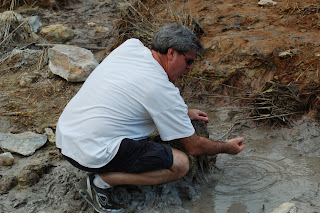
It was a wonderful walk. At one point we came to an area that the ladies of the Pastoral House pointed out to us. Bubbles were rising up through the water from the ground and the water was incredibly hot; so hot that you wouldn’t even want to take a bath in it. It was like a mini Yellowstone.
We came back to eat super at the Pastoral house The rest of the night was spent working on the care packages that the folks at the Indianola Trinity United Presbyterian Church have created for their sister community of Casa de Zinc. Tomorrow we will visit Casa de Zinc and deliver these packages. Then we will go to Casa De Zacate and meet the families. El Salvador is a beautiful country and I have enjoyed seeing the museums, historical sites and beauty of the country side. But I am looking forward to meeting the people and visiting in their homes.

Friday, February 11, 2011

Trinity UPC Delegation & Friends - Day 3

Day 3 - El Mozote Massacre
Today we traveled approximately 100 miles to the northeast to visit the village of El Mozote, where 1,070 men, women and children were massacred on Dec 11, 1981. The Salvadoran armed forces had been trained by the U.S. military. It was considered to be one of the worst atrocities in modern Latin American history. The purpose was to eliminate the rebel presence in the area, where there was a guerilla camp and training center. There was one lone survivor of the massacre. A member of the current community told the detailed story to us and Kathy interpreted. Blanca and Cecelia of the pastoral team lead a very moving memorial ceremony, as we gathered around the site where the children and babies were killed, now called the Garden of the Innocents.

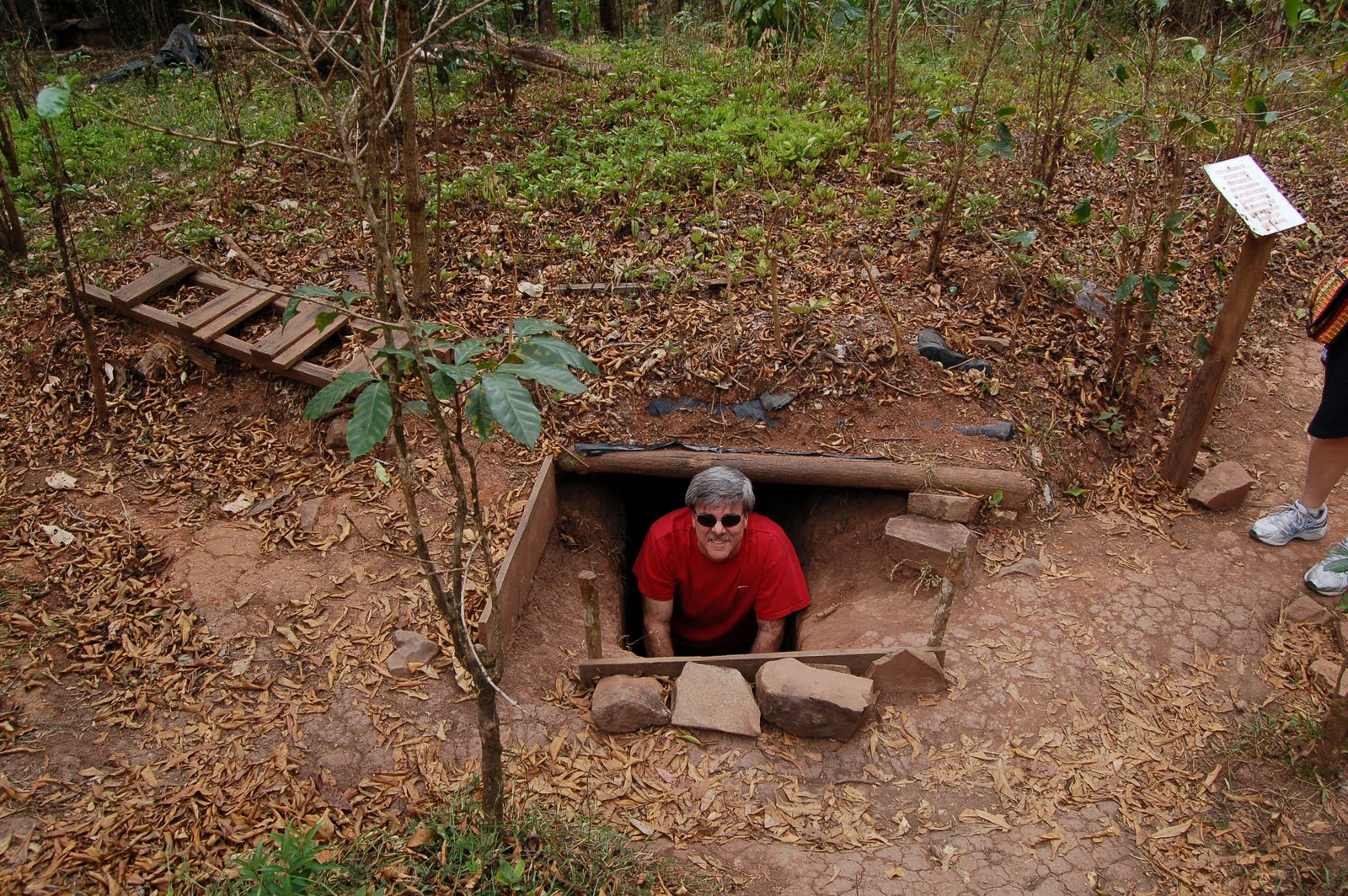
From there, we traveled to Perquin to visit the war museum and leftover bunkers, bomb craters and recovered aircraft from this area that had broad popular support of the guerilla presence. The rugged landscape was thick with trees that provided cover from the military patrols. We also visited an actual guerilla encampment down the road. Many of our group went through one of the tunnels that is still there and crossed a suspension bridge, one by one. It was a very full, intense day, but so very important to learn more of the history of El Salvador and the events leading up to the Civil War and the peace agreement that was signed in 1992. We had a late lunch en route back to Berlin.

We again ended our day with a lively reflection time and devotions.

Thursday, February 10, 2011

Trinity UPC Delegation & Friends - Day 2

Day 2 - Wed., Feb. 9, 2011
Today included a visit to the Parque Cuscatlan (Cuscatlan Park) in San Salvador to see the civilian war memorial naming those who lost their lives during the civil war of the 1980's. Then onto La Divina Providencia (a cancer hospital run by nuns) where Monsignor Oscar Romero lived and was martyred in 1980 while presenting the elements during communion. One of the nuns living at the Divina shared the details of Romero's life as he spoke out about poverty, social injustice, assassinations, and torture of the Salvadoran peoples. In part of the sister's narrative, she offered for us to stand behind the altar where Romero was standing when the hired assassin came thru the front doors of the chapel. This was a very touching experience for us. The image of Archbishop Romero is found everywhere in El Salvador, a testament to the greatness of this man.

We then travelled on across the vast city of San Salvador (2 million population) to the UCA (University of Central America) to a small museum dedicated to the memory of 6 Jesuit Priests, their housekeeper and her daughter who were executed by the soldiers in retaliation for speaking out against the human rights violations by the military.

From there, we went to lunch and visted artisan shops, beforing heading to Berlin. We got settled into our rooms and had a meeting with the Pastoral Team, exchanging greetings and discussing the week's plans. We end each evening with devotions and reflecting on the day's experiences.

Wednesday, February 11, 2009

Day 8 - El Salvador to Iowa

We actually made it out of bed at 4:45 a.m. and we were ready to go when Alfredo came to pick us up one last time in the dark blue microbus with Becky's Tours on the side. Alfredo is a small handsome man of small stature (pictured here with Kathy Mahler). If he was lucky, he came up to Larry's armpit... (and Larry Lepper is 6'5") But sweet? Oh my, what a nice man. He takes good care of all of Kathy Mahler's delegations and also of Kathy. And that's good to know.

The day was not too eventful... other than traveling back home to Iowa – only (lots of) miles. We went through every checkpoint – I couldn't seem to get my act together at the first security stop and had to be reminded to take my shoes off and then set off the alarm when I forgot my phone was in my pocket. The next time I did a better job. Mary (MacKenzie) got stopped at Customs to check her bag. That was after they confiscated her hot sauce that she was taking home. I guess she might have gotten it through in her checked bag, but after Blair's (Lawson) experience with the flavoring on the way down, could you imagine all of Mary's clothes smelling like hot sauce when one of those bottles broke?

Larry (Lepper) and Blair also got pulled aside to have their shoes checked after they declared that they'd been on a farm, or spending time with cattle. Larry actually got his shoes washed, but Blair didn't. I guess they didn't figure Blair had been doing as much serious cattle rustling as Larry, since Larry had on his cowboy hat and Blair didn't (don't think he has one).

It was a rude awaking to come home to 30 mph NW winds after the warm temps we'd experienced. I guess it's back to reality... huh?

But, before I close, I just want to say a few thank yous. Thanks to my Trinity United Presbyterian Church friends for planning a trip of which I could be a part. I was the last to join and they very bravely took me under their wings and showed me all I needed to know to not look too unintelligent this past week. Being the only rookie didn't prove to be too challenging with all of their help.
There was Larry Lepper, our financial guru who kept close track of all our money. He spoke much Spanish and was not afraid to jump right in and try to speak to anyone. He wanted very badly to just blend in with the natives, but at 6'5' which white hair, he wasn't too successful. He was a huge asset to the trip and this was his second. Thanks, Larry.

There was Dave Endriss, our fearless pastor. He kept a quiet profile all week and only stepped into his pastoral role when asked. Otherwise, he made us all feel his equal – just 6 Trinity folks wanting to learn all we could. Thanks for your quiet leadership and friendship to all and lots of balloon fun! Thanks, Dave.
There was Blair Lawson, long time friend and our quiet, insightful one. He always had the interesting questions. I've lost track of the number of times he's been to El Salvador. He knows much about what goes on there. He will soon be president of the Indianola Rotary Club, so was taking lots of notes for them regarding the water filter project. Thanks, Blair.

There was Denise Core, a long time friend... the organized one. This was her third trip(?), so she knew a bit about what to expect and kept me informed when need be so that I'd look halfway intelligent. Always had anything we'd forgotten to pack. Thanks, Denise.

And then there was Mary MacKenzie, also a long time friend... her second trip. She's the strong and steady one – never afraid to try anything new. She was right there every time we went anywhere in the back of the truck with the guys hanging on for dear life. But, she was there. Thanks, Mary.

And Kathy Mahler... what can you say about Kathy? What a rock of a mission co-worker! She's there. She's wherever she needs to be. She does whatever she needs to do. And she's doing it well. And I enjoyed so much being able to see her there in her own world. I'd heard all about it, but now, I've been able to experience it. Thanks, Kathy.

And to Compañeros... my deepest thanks for making this trip happen for me. I come home with new insight into the El Salvador mission. I've been there and I've seen it. Not only have I seen my Casa de Zinc brothers and sisters with my own Trinity brothers and sisters, but I've seen El Tablon and El Recreo. I was close to Virginia, San Francisco, Las Delicias, Corazol, Munosis, San Felipe (I either saw the names on signs or Kathy would say, we're now in.) I couldn't make it to all of them, but I've seen what you're doing there. I've been there. I thank you with all of my heart for allowing me this experience.

And thanks to Nancy Lister-Settle and Kim Coulter for planting the seed... two months' ago, this trip wasn't even on my radar screen.

–Betty


(Pictured left to right) Milagro, Mary MacKenzie, Betty Dyer, Denise Core, Blanca, Kathy Mahler, Idalia, Larry Lepper, Otilia, Dave Endriss, Cecelia, Blair Lawson.

Day 7 - Cinquera to San Salvador

Tonight we’re back in San Salvador after a long day of playing tourist. We first visited the town of Cinquera where we listened to Don Pablo Alvarenga tell us the story of the reasons behind, beginning of , and some of the atrocities of the civil war in El Salvador that began in the late 70’s. We had a translator again – this time it was Raul – who did a wonderful job of telling us the story while Don Pablo did. We sat on the front porch of the house next to his for more than two hours and he had to cut it short for us. He could’ve talked for 5-6 hours, we were told. Horribly, he lost 5 of his sons & daughters in that war, so he’s very passionate about it and tries to get the real truth out to those who want to hear it.

Next, we had lunch on top of a hill right there in Cinquera – it was fried chicken and it was waiting for us when we trekked up there. One again, there was a beautiful view outside the building. Raul joined us, as well as our microbus driver, Alfredo, who came to pick us up this morning at the pastoral house.

And speaking of the pastoral house… we had to say good-bye this morning. It was a tough one, but I was told by Blanca (pictured here) that I was only to say “Hasta Pronto” which means, “See you soon”. So, after lots of hugs and a few tears, the pastoral team sent us off with Alfredo and Kathy on to pick up Raul. He was taking the bus to meet us in Cinquera, but was delayed, so we were picking him up somewhere along the way. I have no idea in which town that was… they’ve all run together this past week and as I mentioned before, my sense of direction was checked at the airport in Des Moines, Iowa. I’m just hoping to pick it up again when we get back.

We next went to San Salvador where we dropped of Raul and said our thanks and goodbyes to him. He was headed home back in Usulután. We went on to visit UCA (University of Central America). We went to the building where in 1989, eight people were murdered – six Jesuit priests, their housekeeper, and her daughter. They were activists speaking out about the atrocities of the El Salvador military and government. It was a very moving place to visit, knowing what had taken place there. There were paintings, photographs, books, a rose garden; all things that showed very graphically what a horrible situation took place there on that day in 1989.

It was very beneficial for me to be able to see and learn about such very important things in the history of El Salvador. These were very important things in shaping the country that exists now and you can see it in the choices of things hanging on the walls in the pastoral house.

We went back to the guest house, Los Pinos, in San Salvador late afternoon. We ate out down the street – walked two blocks and had a great meal of chicken, fish, iguana, and other goodies. Dessert was another block away where we had ice cream cones. Oh wait – some of us had two ice cream cones. I guess we’d been deprived for a week – most were surprised that we’d never made it to the ice cream shop in Berlin.

Our financial guy, Larry (Lepper), affectionately called by us, “Moneybags” finished up paying our bills and informed us that we did have some money left over that we were going to be able to leave in our account at the pastoral house for a further project. That’s always great news! We really appreciate Larry taking on that responsibility for us all week and making sure that we were staying within our budget.

With a 4:45 a.m. wake-up call coming, we had our last evening of reflections together and turned in by 9:30 p.m. And tomorrow it’s time to go home again.

–Betty

Monday, February 9, 2009

Day 6 - School Visits

Today it was hot and sunny. Today we saw the smiles on the faces of hundreds of innocent children in their schools. We visited 3 schools in the area. We saw pure joy when they saw us coming. We heard them giggle. We sang for them and they sang for us (their song was better). We took their pictures and showed them their images on our cameras so they could giggle more.

We saw some children in uniforms and some in regular clothes. We saw some with shoes on and some without. We saw some with clean faces and some with dirty ones. We saw school yards with pigs rooting in them. We saw school yards with no playground equipment - just sticks and dirt. We saw happy teachers that were so proud of their students and their schools. And then it broke our hearts when we had to leave... because they hugged and hugged us and didn't want us to go. Some tried to leave with us. And you just wanted to scoop them all up and take them with you.

We saw where more mudslides had been and folks had relocated. We saw where one small village is going to be relocated so that they can live in concrete homes instead of the tin and stick homes where they ended up in after the mudslide. Their current homes were right along the side of the road - literally at the edge where if you stuck your hand out the pickup window too far, you'd be in someone's home space. Their doors open onto the road and the metal fences that have been put up to separate their space from the world are just more large pieces of corrugated tin that they've found somewhere - the same as the walls of their house. There is no grass here. This is the dry season and there is only dirt. Dirt - everywhere. There really is no escaping it.

This afternoon we visited El Tablon, which is Heartland Presbyterian Church's sister parish. They have made a huge contribution to this community in the El Tablon Centre school and the new El Tablon Cerna school which is to be finished in the next couple of weeks. We got to see them putting the finishing touches on that school and even got to talk to a couple of young ladies who are looking forward to that school opening very soon. There is a soccer field at that school, too, which Heartland also helped provide. Remember, though... no grass. Just dirt - and lots of it.

The roads to and from today were much the same as all the past days... more of lava rock made into a path or just more dirt. We were again traveling along the side of the mountain around and around and around... and up and down and straight up and straight down - maybe a little more so than yesterday, but honestly, they've all run together. I really don't know how Kathy (Mahler) tells them apart and how she remembers where to turn to get to which canton or which caserio or how to take someone home and on and on and on...

There was more riding in the back of the pickup - again - not me. I kept Kathy company in the truck and we had a great talk. I do miss her in Iowa and I had to make up for lost time and get caught up on some things. And today was our last lunch at the pastoral house and the ladies' great food. That was sad. We took them and Kathy out to supper this evening in Alegria - the next town in some direction (I have no sense of direction here at all). It was the six of us, Kathy, Blanca (pictured here, right), Otilia, Idalia (pictured here, left) and Cecelia. Milagro had to stay back at the house, as she had a meeting to attend. These are all names that I have been so thrilled to place with faces this week. Names that I've heard for 3 years - that have finally become people. And oh, how they've become people - people that I now know and love... my sisters in Berlin.

As we said our formal good-byes and thank-yous after supper, while still at the restaurant, with Kathy interpretting, I found myself once again speechless – yes – twice in a week. I know it's hard to believe, but it's true. Not only could I not say what I wanted to say to them because I still can't speak their language, but I just couldn't say anything. I just had to ask Kathy once again to tell them how much I appreciated getting to know them and how much I've grown to love them in the past week, but could barely get the words out.

As I was sitting here typing about 20 minutes ago, with Kathy beside me on her computer in her office, we heard a rustling and turned around to find Blanca and Cecelia standing behind us giggling. They had a sack and handed it to me, while Cecelia put a knitted polka dot hat on my head. I opened a sack to find a large, bright-colored blanket in it that they had bought for me, their "sister", as a going-away present. Again, I'm speechless...

Luckily, Kathy is leaving with us to go back to San Salvador tomorrow, so I didn't have to say good-bye to her tonight, or won't have to do that in the morning yet either. But, she put it all into perspective and I laughed so hard I started to cough (my usual routine) when she told me it would be better if I would find a place to display my new hat in the corner of my room. (obviously, not a good look.)

I've waxed poetic enough for one evening now, so must close and go wash my feet before I can put them into my bed. And on to Day 7...


– Betty